.png)
Azerbaijan's Prisons Face Severe Sanitary Crisis Despite Millions in Funding, Say Detainees and Rights Groups
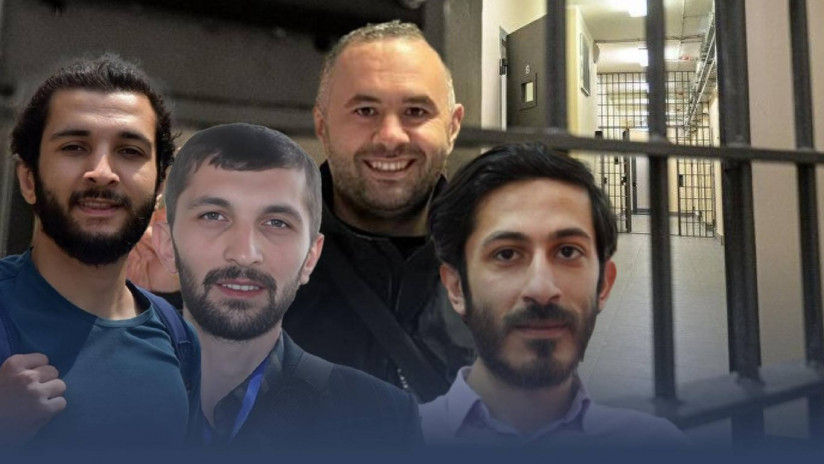
Recent alarming concerns voiced on social media and in independent media regarding the detention conditions in Azerbaijan's pre-trial detention centers and penitentiary institutions have ignited a heated public debate. Information released by both arrested individuals and convicts paints a stark picture, indicating that the sanitary situation in these facilities falls significantly short of upholding basic human dignity.
In response to these grave complaints, "Tribunat," an analytical platform, has conducted an in-depth analysis, examining the reported conditions against the backdrop of both local legislation and international human rights law.
First-hand Accounts Reveal Deplorable Conditions
The disturbing reality inside Azerbaijan's detention facilities is brought to light through the candid testimonies of those currently held within their walls.
Journalist Ali Zeynal, detained in connection with the "Toplum TV case," penned an open appeal to the Minister of Justice, detailing his experience at Baku Pre-Trial Detention Center: "Approximately 3-4 weeks ago, your deputy or a commission from the ministry 'graced us with their presence'... If they had also 'graced' cell 19, which is opposite cell 12, even for 1-2 minutes, I would have gladly shown them our personal belongings, clothes, and food and drinks contaminated by sewage. If no one was disgusted, I would even display the huge cockroaches. But excuse me, no matter how much they insisted, I wouldn't want to talk about the rats coming out from under the floorboards and sewage pipes. Even if it was a lie, my heart wouldn't allow those who came for 'inspection' to be horrified."
Afiaddin Mammadov, chairman of the "Workers' Table" Trade Unions Confederation, currently serving a prison sentence, reported encountering similar conditions. He claims that at Penitentiary Institution No. 2, rats freely infest the kitchen, tearing through food boxes and consuming provisions. Mammadov further stated that rats are present even in the sleeping areas, and the block, housing over 250 convicts, has only four sanitary facilities. Disturbingly, it is reported that after he made this situation public, he was threatened with transfer to a stricter regime institution.
Ulvi Hasanli, director of "AbzasMedia," offered a chilling description of the quarantine zone at Baku Pre-Trial Detention Center, stating, "Here, prisoners don't sleep at night so that insects don't get into their mouths and ears."
Adding to the list of grievances, journalist Polad Aslanov, also imprisoned, recently reported from Penitentiary Institution No. 15 that prisoners were being charged 100 manats each for a newly constructed bathroom within the facility, amidst other complaints.
These collective accounts unequivocally demonstrate that the living conditions for arrested persons and convicts in Azerbaijan fail to meet even the most basic hygienic and sanitary requirements.
Breach of National and International Legal Obligations
The documented conditions stand in stark contrast to the explicit obligations set forth by both Azerbaijani national legislation and international human rights instruments. Article 46 of the Azerbaijani Constitution and Article 3 of the European Convention on Human Rights both guarantee the protection of every individual's dignity and strictly prohibit degrading treatment and punishment.
The jurisprudence of the European Court of Human Rights (ECtHR) has consistently underscored that holding individuals in unsanitary conditions constitutes degrading treatment. In the case of Canali v. France (paragraph 53), the Court noted that a disregard for hygiene rules can induce feelings of despair and humiliation in a prisoner, amounting to degrading treatment. Furthermore, in its decision regarding Ali Insanov v. Azerbaijan (paragraph 116), the ECtHR found a violation of Article 3, citing poor ventilation in cells and the lack of separation between toilet areas and general living spaces as hygienically unfavorable.
Azerbaijan's own Law "On Ensuring the Rights and Freedoms of Persons Held in Places of Detention" (Article 22.1) mandates that detained or arrested persons must be provided with necessary material and living conditions in accordance with sanitary and hygienic rules. Article 22.4 of the same law stipulates that medical examinations, prophylactic treatments, sanitary-hygienic measures, and anti-epidemic measures shall be implemented in detention facilities according to legislation. The Internal Discipline Rules of Pre-Trial Detention Centers (24.1) further reiterate that arrested persons cannot be held in conditions that degrade human dignity. Similarly, Article 10.2.1 of Azerbaijan's current Code of Execution of Punishments asserts that convicts must serve their sentences "in conditions ensuring respect for the human person."
Internationally, the European Penitentiary Rules are clear: the entire area of a penitentiary institution must be kept consistently clean and tidy (paragraph 19.1), and cells and other rooms where prisoners are placed upon admission must be clean (paragraph 19.2).
Evidently, based on the numerous complaints from arrested persons and convicts, Azerbaijan's pre-trial detention centers and penitentiary institutions are failing to comply with these established local and international standards.
A Paradox of Funding: Millions Allocated, Standards Unmet
The current state of affairs also highlights a troubling failure by the Penitentiary Service to fulfill its legally defined functions. According to the Regulation "On the Penitentiary Service of the Ministry of Justice of the Republic of Azerbaijan," this body is tasked with ensuring arrested persons comply with sanitary and hygienic requirements (paragraph 3.1.14) and providing medical and sanitary services (paragraph 3.1.15). Crucially, paragraph 5.3 of the Regulation places personal responsibility for these duties on the Deputy Minister of Justice, who also serves as the Head of the Penitentiary Service.
Adding to the dismay, significant public funds have been allocated to the Penitentiary Service. For the last five years alone, a staggering 63,229,082 manats (approximately $37.2 million USD) were allocated from the state budget for healthcare programs and other services within the Penitentiary Service. This includes 14,949,049 manats for 2024, 12,747,459 manats for 2023, 12,456,273 manats for 2022, 12,115,519 manats for 2021, and 10,960,782 manats for 2020. Furthermore, since May 2023, the Penitentiary Service has announced 11 tenders related to construction supplies, medical purposes, and the acquisition of soft inventories and beds, with 8 of these completed at reported costs of approximately 140,000 to 150,000 manats each for publicly disclosed tenders.
Despite the allocation of such substantial financial resources, the sanitary and hygienic conditions in detention facilities for arrested persons and convicts remain far from acceptable standards. As the ECtHR stressed in Mamedova v. Russia (paragraph 63), a state is obligated to organize its penitentiary system based on the principle of human dignity, regardless of material difficulties. In Azerbaijan's case, however, no such financial difficulties appear to hinder the penitentiary sector.
The Internal Discipline Rules of Penitentiary Institutions (paragraph 358) explicitly mandate regular disinfection, disinsection, and deratization of living quarters, dining halls, kitchens, warehouses, and other rooms. The ECtHR's "Guide on Prisoners' Rights" clarifies that these measures include providing appropriate disinfectants and conditions to combat pests such as rats, lice, ticks, and bedbugs. Yet, the grim reality in Azerbaijan demonstrates that these vital standards are not being applied.
Even supervisory efforts seem insufficient. The Ombudsman's annual report for 2024 indicates that a total of 126 visits were made to Penitentiary Service detention facilities. However, despite these numerous inspections, unsanitary conditions, severe overcrowding, and persistent violations of prisoners' rights continue unabated within penitentiary institutions.
The international community has also voiced its strong concerns. In July 2024, the European Committee for the Prevention of Torture and Inhuman or Degrading Treatment or Punishment (CPT) issued a public statement, highlighting what it called an "extremely serious violation" of the Azerbaijani government's cooperation obligation under Article 3 of the Convention. The CPT underscored the critical importance of implementing its long-standing recommendations regarding the treatment of persons under the control of law enforcement agencies in Azerbaijan.
"Tribunat" concludes that the continuous and repeated complaints from arrested persons and convicts regarding their detention conditions squarely place the responsibility on the Penitentiary Service, the Ministry of Justice, and oversight bodies – particularly the Ombudsman institution – to take decisive action to safeguard prisoners' rights. All these compelling facts collectively demonstrate that the current detention conditions within Azerbaijani penitentiary institutions are in clear violation of both the country's domestic legislation and its international human rights obligations.


Comments