.png)
Azerbaijani opposition activist sentenced to two years in prison
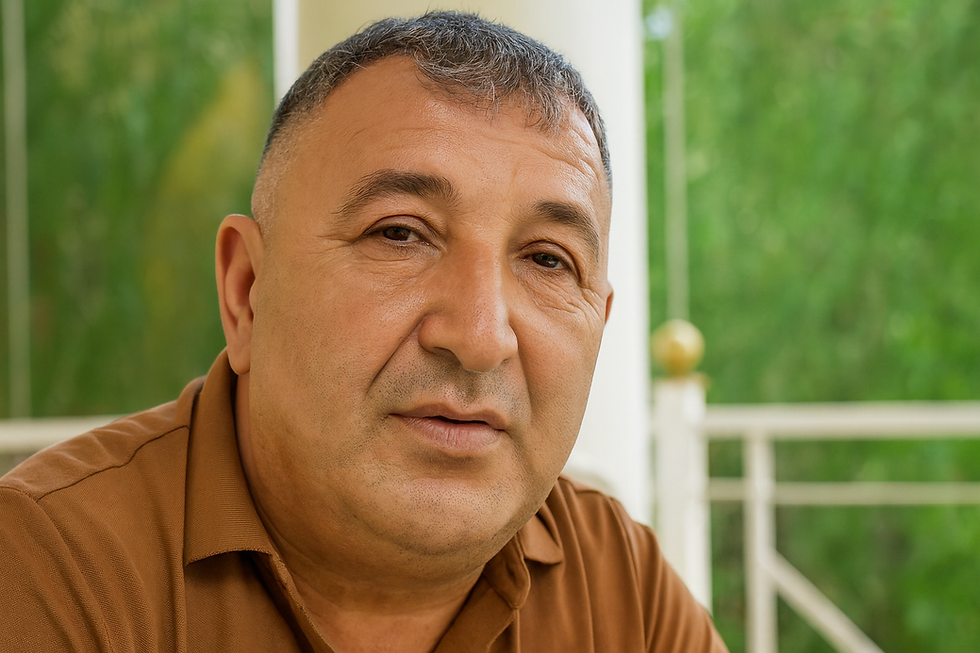
An Azerbaijani court has sentenced an opposition activist and disabled war veteran to two years in prison on weapons charges that his supporters say are politically motivated.
Vugar Gadirli, a member of the Azerbaijan Popular Front Party (APFP) from the Imishli district, was sentenced at the Imishli District Court on 30 June. Gadirli, a veteran of the Karabakh conflict who holds a second-class disability status, was detained on 12 December last year.
The APFP said Gadirli has denied the charges of illegal weapons possession. The party has raised serious concerns about his deteriorating health, claiming that he has embarked on a hunger strike at the Lankaran Penitentiary Complex.
"Vugar Gadirli suffered a serious head injury during the Karabakh war and still has shrapnel in his head, causing him unbearable pain," the APFP said in a statement. The party alleged that prison officials have refused to accept medication brought by his family for nearly two months, creating a "life-threatening situation" for the activist.
Azerbaijan's Penitentiary Service and the country's Human Rights Ombudsman did not respond to requests for comment.
Nearly 20 APFP activists, including the party's leader Ali Karimli, are currently in detention. While Azerbaijani authorities maintain that there are no political prisoners in the country and that those detained have committed specific criminal offences, local human rights groups estimate that there are approximately 300 political prisoners currently held in Azerbaijani jails.
Azerbaijan has extended its special Covid-19 quarantine regime until 1 October 2026, keeping the country’s land borders closed for general travel.
The decision, signed by Prime Minister Ali Asadov, extends restrictions that were due to expire on 1 July. The government continues to justify the measures as necessary to prevent the spread of coronavirus, despite the World Health Organization (WHO) declaring an end to the global pandemic emergency in May 2023.
Azerbaijan’s land borders have remained closed since March 2020. Independent critics and opposition figures have accused the government of maintaining the closure for political and economic reasons.
More than 9,000 teachers in Azerbaijan have had their employment contracts terminated after failing a mandatory certification process.
Education Minister Emin Amrullayev announced that 9,334 teachers were dismissed after failing both their initial and secondary attempts at the exams. However, Amrullayev noted that 91,407 teachers successfully passed the process, which was introduced in 2022.
Those who passed have received salary increases of between 10% and 35%. The reform has previously sparked protests in Baku, with unsuccessful teachers alleging a lack of transparency and technical issues during the testing.
The Azerbaijani parliament is considering draft legislation to establish a new state regulatory body with broad powers over digital and social media content.
The proposed Media and Broadcast Council would merge the functions of the existing Media Development Agency (MEDIA) and the Audiovisual Council. Under the new draft, the council would be empowered to analyze digital content on social media platforms and request sanctions against media outlets deemed to have violated the law.
Independent media experts have criticized the move, warning that it will dismantle public oversight and further restrict independent journalism in the country, where more than 20 journalists are currently detained.
Armenia's international internet traffic is to be routed through Azerbaijan under a new agreement signed between Azerbaijani and Armenian telecommunications operators.
Azerbaijan's primary backbone internet provider, AzerTelecom, confirmed it had signed a transit agreement with Telecom Armenia. The company said the deal would help diversify routing and improve network reliability in the region.
The agreement comes amid ongoing diplomatic normalization efforts between the two countries, which saw their borders reopen to commercial freight transport last year following the end of the decades-long Karabakh conflict.
Health authorities have banned swimming at several popular beaches along the Caspian Sea coast due to high levels of pollution.
The Ministry of Health said that water quality tests at beaches in the Sabail, Surakhani, Khazar, and Garadagh districts of Baku, as well as sites in Khachmaz and Lankaran, did not meet safety standards. Officials attributed the pollution to the discharge of untreated wastewater and sewage.
Separately, the state oil company SOCAR confirmed it had launched repairs on an underwater pipeline near Dubandi after a mechanical failure, believed to have been caused by a ship’s anchor, resulted in an oil spill in the Caspian Sea.


Comments