.png)
Gori Art House: Independent gallery fights closure in Georgia's Supreme Court
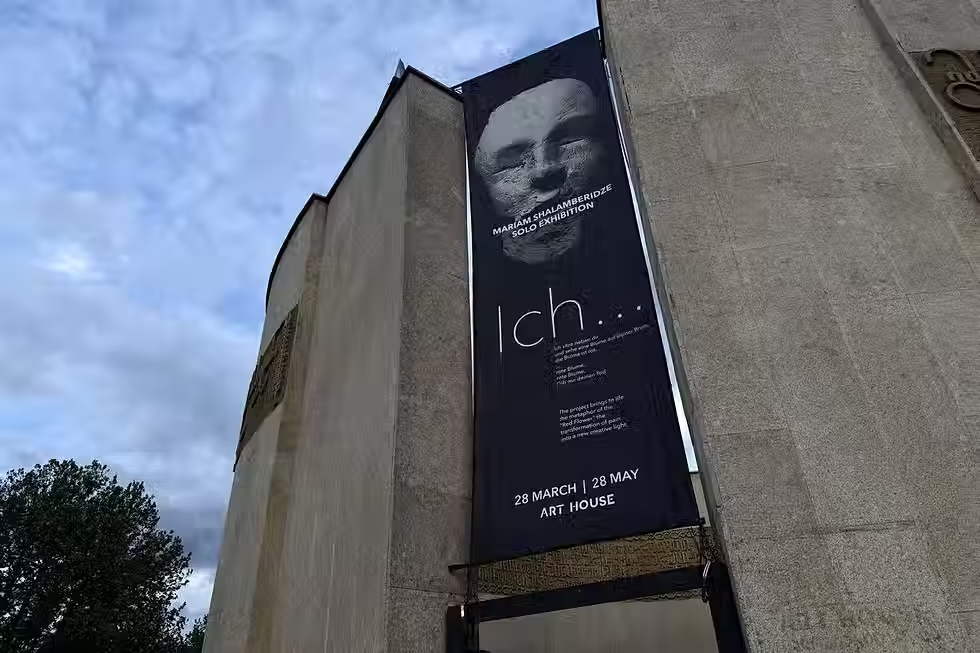
An independent art gallery in the Georgian city of Gori is fighting a legal battle in the country's Supreme Court to prevent local authorities from evicting them.
The dispute began after the Gori Art House hosted an exhibition critical of the ruling Georgian Dream party, which organisers say triggered a campaign of intimidation by local officials.
Local municipal authorities have demanded the group vacate the former Soviet-era building, claiming they plan to convert the site into a youth innovation centre.
Founded in 2021 by the Gori Photographers' Club, the gallery was established to foster contemporary art in a city widely known as the birthplace of Soviet dictator Joseph Stalin.
The friction between the gallery and the municipality escalated in late 2024 following an election campaign speech in Gori by Georgian Dream founder Bidzina Ivanishvili.
During his speech, the billionaire billionaire suggested Georgia should apologise for the 2008 war with Russia over the breakaway region of South Ossetia, sparking widespread anger in the heavily bombed city.
In response, the gallery hosted an exhibition featuring protest slogans from Georgia's modern history, including the phrase: "A war-torn city does not apologise."
"Who gave you permission to do this?" staff member Tato Tsikaridze said a local government representative asked shortly after photos of the exhibition appeared online.
Following the visit, the municipality ordered the group to terminate their renewable lease. Organisers said the authorities subsequently cut the building's water and electricity supplies.
The municipality took the case to a local court, which ruled in its favour. The decision was upheld by the Court of Appeals, leaving the Supreme Court as the gallery's final legal recourse.
The legal battle comes amid what local activists describe as a shrinking space for independent civil society organisations in Georgia.
Many residents in the city of 50,000 work in municipal jobs, and organisers said fear of losing employment has led to a drop in visitor numbers.
"People who protested the government or the elections were let go from their jobs," artist and board member Mariam Shalamberidze said.
Despite the pressure, the gallery's founders say they are determined to continue their work.
"We are more united around our idea, our goal, which is not tied to the building itself," Shalamberidze said.
Oto Gvritishvili, another board member, added that the group would find alternative ways to display their work if they lose their home.
"We will organise partisan events around the city, if we have to," Gvritishvili said.


Comments